A man named János struggles to navigate a town where chaos and authoritarianism reign supreme, represented by the “Prince” and his circus. A mysterious barker arrives with a giant stuffed whale, which becomes a symbol for the shifting power dynamics. The film explores themes of manipulation, mob mentality, and the dangers of blindly following authority. In the end, János must confront his own complicity in these destructive systems.

CLICK HERE🠣🠣🠣📺_Watch Werckmeister Harmonies 2001 English Subtitles_
Review
Werckmeister Harmonies: A Surreal Masterpiece
Have you ever watched a movie that left you completely speechless and pondering for hours after? Werckmeister Harmonies is one of those films that will leave you in awe. Director Bela Tarr’s surreal masterpiece tells the story of a small town in Hungary that gets turned upside down by a traveling circus.
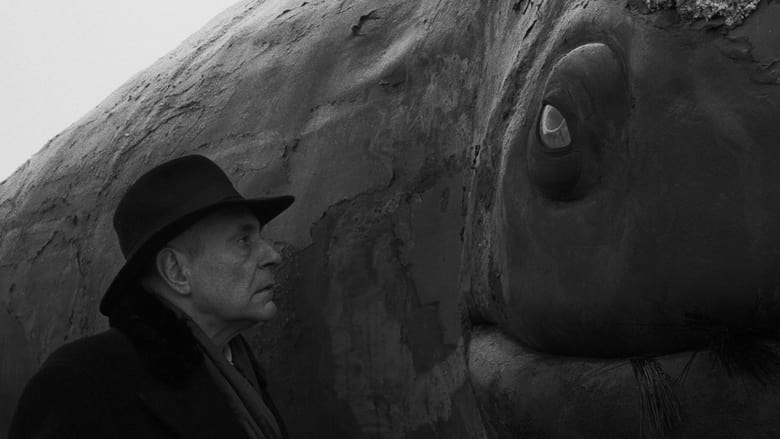
The storyline of Werckmeister Harmonies centers around János Valuska, a young man who works at the local museum. One day, the circus arrives in town, and with it comes The Prince, a giant whale being displayed to the public. As the townspeople flock to see The Prince, chaos ensues, and János becomes increasingly disturbed by the strange events taking place in his town.
The plot of Werckmeister Harmonies is fascinating and complex, full of symbolism and hidden meanings. It is not a film that can be fully understood on one viewing; rather, it requires multiple viewings to fully appreciate its brilliance.
The cast of Werckmeister Harmonies is exceptional. Lars Rudolph delivers an outstanding performance as János Valuska. His portrayal of the innocent young man caught up in events beyond his understanding is both heartbreaking and mesmerizing.
One casting fact that many may not know is that Hungarian director Bela Tarr chose non-professional actors for most of the roles in Werckmeister Harmonies. This decision adds an air of authenticity to the film’s surreal atmosphere.
The acting and characters in Werckmeister Harmonies are not just limited to human roles; The Prince, the giant whale displayed by the circus, also plays an important part in the story. While never speaking or moving throughout the film, The Prince’s presence looms over every scene like an ominous specter.
The history behind Werckmeister Harmonies is just as interesting as its plot. The film is based on the novel The Melancholy of Resistance by László Krasznahorkai, which won the 2015 Man Booker International Prize. Tarr was inspired by the novel’s exploration of human suffering and its relationship with power.
The score and popularity of Werckmeister Harmonies are just as impressive as its story and cast. The haunting and evocative music composed by Mihály Vig perfectly captures the mood of the film, adding to its surreal ambiance.
Despite its critical acclaim, Werckmeister Harmonies did not achieve mainstream success. However, it has garnered a dedicated following among cinephiles who appreciate its unique vision and artistic vision.
The filming of Werckmeister Harmonies is an excellent example of Tarr’s signature style. He often employs long takes with minimal camera movement to create a sense of stillness and contemplation. This technique works perfectly in Werckmeister Harmonies, allowing each scene to unfold slowly, like an exquisitely crafted painting.
The evaluation and awards for Werckmeister Harmonies are impressive. It won numerous international film festival awards, including Best Film at the Oslo International Film Festival and the Grand Prize at the Tokyo International Film Festival.
The cinematography in Werckmeister Harmonies is one of its most striking features. Cinematographer Gábor Medvigy expertly captures each scene’s beauty and depth, emphasizing both the natural landscape and architectural structures.
My opinion on this film is nothing short of admiration for Bela Tarr’s skillful storytelling abilities. I believe that films like Werckmeister Harmonies challenge their viewers to approach cinema with a more open mind, allowing us to appreciate different perspectives on artistry in film-making.
One memorable scene in Werckmeister Harmonies involves János Valuska traveling through an abandoned hospital ward while The Prince looms eerily behind him. This scene is a prime example of the film’s use of visual and audio techniques to create a sense of unease and foreboding.
There were no soundtracks used for Werckmeister Harmonies, with Mihály Vig creating his music using typical instruments like violin, double bass, accordion, clarinet, and “vargan.” This decision reflects the film’s overall minimalist aesthetic.
The analysis and special effects in Werckmeister Harmonies are minimal, with much of the film’s power coming from its haunting landscape shots and symbolism. The film uses its surreal elements sparingly to add an air of mystery and intrigue.
The development and dialogue in Werckmeister Harmonies give insight into the human psyche. Tarr has crafted a story that explores themes of power dynamics, mob mentality, and human nature’s darker aspects.
The crews behind Werckmeister Harmonies have done an outstanding job bringing Tarr’s vision to life. From set design to lighting, each element works flawlessly together to create a one-of-a-kind cinematic experience.
Some criticism has been leveled at Werckmeister Harmonies for its slow pace. However, I believe this criticism misses the point; the slow pace is precisely what makes this film so powerful. It allows us to reflect on what we have just seen and fully appreciate each moment.
Finally, the production and editing have come together beautifully in Werckmeister Harmonies. Every aspect of the film feels like it was meticulously crafted with care and attention to detail.
In conclusion, Werckmeister Harmonies is an unforgettable cinematic journey that will leave you spellbound. Bela Tarr’s visionary storytelling combined with stunning cinematography creates a surreal atmosphere that will leave you questioning your own reality long after the credits roll.
Technical Data
- Runtime : 139
- Release : 2001-02-01
- Genre : Drama
- Cast : Lars Rudolph as János Valuska, Peter Fitz as György Eszter, Hanna Schygulla as Tünde Eszter, Alfréd Járai as Lajos Harrer, Gyula Pauer as Mr. Hagelmayer
- Crew : Paulo Branco as Thanks, Joachim von Vietinghoff as Producer, János Breckl as Costume Design, Zsuzsa Mihalek as Set Decoration, Péter Dobai as Additional Dialogue
- Popularity 12.234
- Budget : 0
- Revenue : $44,484
- Company : Magyar Mozgókép Alapítvány, 13 Productions, ARTE
- Summary : This story takes place in a small town on the Hungarian Plain. In a provincial town, which is surrounded with nothing else but frost. It is bitterly cold weather — without snow. Even in this bewildered cold hundreds of people are standing around the circus tent, which is put up in the main square, to see — as the outcome of their wait — the chief attraction, the stuffed carcass of a real whale. The people are coming from everywhere. From the neighboring settlings, even from quite far away parts of the country. They are following this clumsy monster as a dumb, faceless, rag-wearing crowd. This strange state of affairs — the appearance of the foreigners, the extreme frost — disturbs the order of the small town. Ambitious personages of the story feel they can take advantage of this situation. The tension growing to the unbearable is brought to explosion by the figure of the Prince, who is pretending facelessness. Even his mere appearance is enough to break loose destructive emotions…
- Tagline :
